Friday, August 28, 2015

"The better to understand what was transformed."- Moving back to the US but no regrets on 3 years in Central America

First off, I apologize to who have written to me offline asking really great questions about sabbaticals, I hope many of you are living it now or planning is going on. I will respond to you!

An explanation for going AWOL virtually and our big change: we have moved to the  Pacific Northwest. Three years ago we left very abruptly thinking it would be a year; we didn't focus too much publicly on the fact that our oldest daughter was having a lot of health problems. (A post to follow about international insurance- buy it, it's not more expensive than peace of mind and it happens to be reasonable.)

One year turned into three but the realization that something remained elusive in understanding our daughter's health became very clear. Finally, we have an answer that is years in coming. It took a young Costa Rican doctor who was an international conference hound to piece together the puzzle and in doing so set off a bomb in our world. This Spring he suggested that our daughter had a hereditary blood disorder.

 The short conclusion is: the minute we learned that there was medicine available in the U.S. (it will never be available in Costa Rica we are told because it is too expensive and ironically enough has been available in Europe for 30 years) we knew we had to come back.

This week we saw the doctor for the first time and our lovely and brave daughter will start weekly transfusions of the medicine just as soon as the insurance can be sorted out. You know it's at scary financial levels when the drug company assigns you a case worker.

There's a lot to catch up on and we want to communicate it all to those who feel a stirring as a family to take a sabbatical. We've been back now for a little more than two months and I've listened to what feels like a million times people probe the kids about living in Costa Rica and speaking Spanish etc. I wish there was a way for you to hear them yourselves, you wouldn't doubt for a minute that taking a sabbatical might be the best thing to happen to your kids.

I was reading an article by the NY Times Magazine's photography critic, Teju Cole and I stopped cold when I read the following: "When I'm moved by something, I want to literally put myself in its place, the better to understand what was transformed. . . how do raw materials become something else, something worth keeping?"

We are completely transformed by the love and friendship that was offered to us so openly by the people of Costa Rica. I will say one more time- try to learn the language, even a couple of phrases. With free YouTube lessons to sophisticated programs, there is just no excuse. I rarely strike that tone but I say it for your own good. I remember vividly an expat who spoke no Spanish saying, 'you'll never become truly friends with Costa Ricans and they won't show up at your parties.' Both not true but I have to say with full honesty that speaking the language helps. 

Our older children knew barely a word of Spanish before we left and now they are virtually fluent; it's possible to take on another language but it takes some elbow grease and the belief you can. 

We are transformed by what we learned.

We are transformed by what we saw.


We are transformed because we have become different people forever- a thorough a dramatic change? Absolutely.

Is taking a family sabbatical an idea worth keeping? I believe so with all of my heart. 

Sunday, January 4, 2015

The Road Never Traveled: What We've Received By Living In Costa Rica


The Road Never Traveled.

Three years ago when we moved to Costa Rica, I wouldn't have guessed that one of the side effects I would value most for myself and for our three kids is the constant shot in the arm of facing the unknown. It's never an easy feeling but it's quite impossible to avoid when you are forced to face it on a daily dosage.


"On today’s journey to the future you don’t have a choice between the road less traveled and the road more traveled. No one has been where you are going. No one has experienced the future you will experience. The only choice you have is the road never traveled." HB Gelatt 


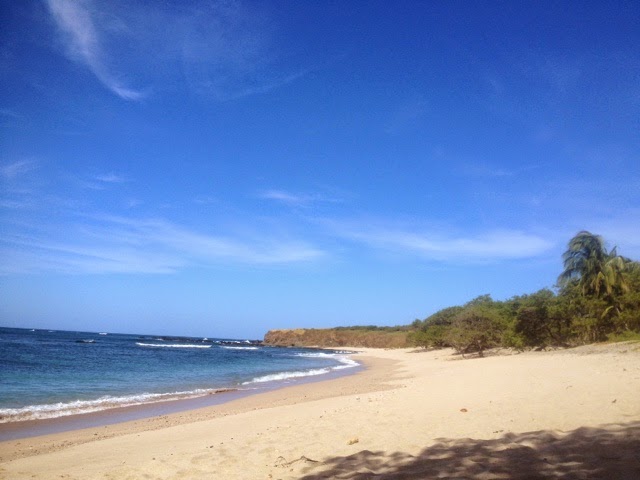
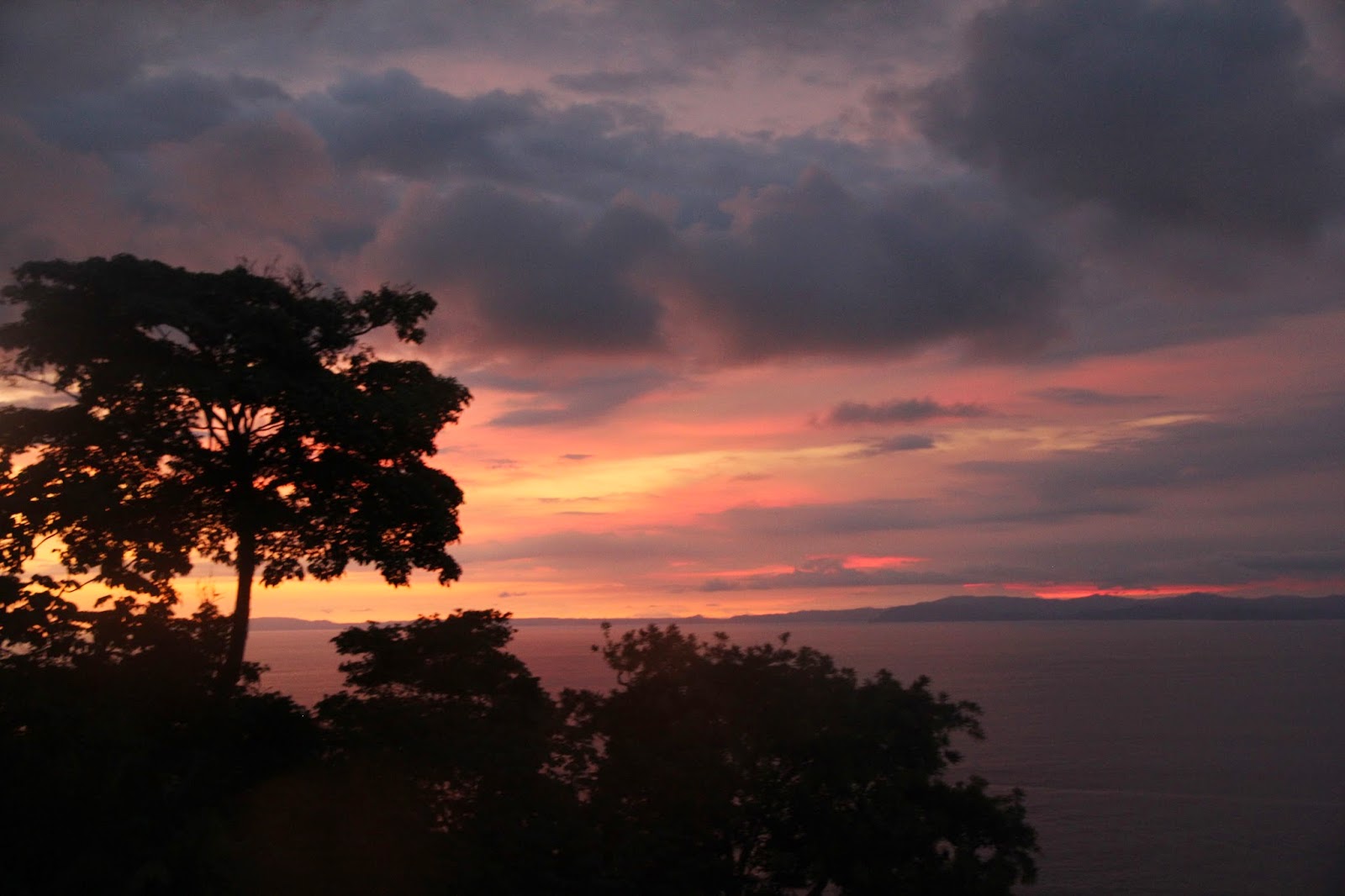
It's great when it looks like this:


or this:


and I'd be lying if I didn't say that we've learned not to put things off that we want to do or see and that means getting out and about.

But sometimes, it looks like this:


In your bed or in your room. Twice in one night. This recently happened when we were traveling with Swedish friends we met 20 years ago backpacking around the world. 
My friend's reaction (brave as hell and honest at the same time about how much it terrified her) got me thinking about what's happened to our kids over the last three years and how it adds up.

Persistence. Living abroad delivers you a lot of obstacles. There's not a lot of room for giving up on a daily or hourly basis. The obstacles start looking more like chance events or something to move through, around, under, or over. Because time has a quality of finiteness (How much longer will we be here? That's a real question.) taking action or inaction is easy to spot. 

Flexibility. You have to become really adaptable. There's a lot of 'unfolding' that happens and things that just can't or won't be rushed. One of my Swedish friend's said he would go crazy living here when we attempted to buy him a chip for his phone. The sitcom-esque experience that took place in the shop was just another day on my end but drove him nuts when he viewed the interaction through the lens of Scandinavian efficiency and customer service. I'm not saying for a second ineffieciency should be to a model to follow or that I don't get driven absolutely crazy sometimes, but I have found that it's easier to be mindful of my reaction because it's in my face all the time. 

Risk-taking. There's a lot more shifting of this behavior into the 'necessary' category. There's just no way around it. There was a recent article that was titled, 'The Odds are Better than you Think' that talks about the human habit of over-estimating the probability of something going wrong. And how we underestimate our ability to handle the consequences of risk. Or that pesky way that we tend to exaggerate the consequences of what will happen when things go wrong. . .

Adversity has the effect of eliciting talents which in prosperous circumstances would have lain dormant.
-Horace

In a nutshell, there's just a hell of a lot of chances for things to go wrong, and they do. And to doubt ourselves, and to have to jump anyway. I'm convinced that one of the reasons that people love to visit Costa Rica so much is the ubiquitous zip-lining. The Swedes tell me it's the first thing that pops up in a search about the country. Sure, the beaches and sloths are exhilarating to experience, but it's nothing like facing yourself and coming out whole. Every time (and it's often) I see the kids do it I am grateful for taking the sabbatical plunge which turned into becoming an expatriate family.

20 years ago we met 'The Swedes' on the deck of an Indoneasian ship. We would go on to miraculously meet up again in Hong Kong on a street corner (these were the days before cell phones so that our plan worked felt like a miracle). We went on to travel through China together, meet in Sweden and later in France. We love them in a way that is profound. Together, we experienced serendipity and the wonder that is possible when you travel. Now our collective children are the ones playing hours of card games, fording rivers, and surmising what makes a place phenomenal or 'meh'. 


When we talked about pursuing the plan we hatched 20 years ago to motorcycle the Silk Road once the kids have left the roost, the kids first reaction was, "But we want to come too!" 

The roads we've traveled with 'The Swedes' are precisely the ones I would never ever give up, they've been amongst the most meaningful, exhilarating and fun of my life. 

It's January 2015. How long have you been thinking about traveling or taking a family sabbatical? 


Don't let the fact that there's no bridge slow you down. 


Thursday, October 9, 2014

Hiking in Costa Rica: "There's no place to hide from yourself."


10 hours a day. Rainy season. Mountain ranges. 

How was it? "Super hard but great" reports J on the 6 day Outward Bound hike that he and his classmates returned from last night. 

*Love how a night's sleep changes a memory. Today the rendition is, "Not great, but you learned a lot."


"If Ms. Anne (the school director) wanted us to appreciate what we have her mission was accomplished." J came back speaking of how much water, shelter, food, his bed and his family meant to him. Oh, and the bathroom. 

At times, they stayed with indigenous families.


It inspired a deep appreciation for shelter and comfort that was profound. He spoke of the idea that when you're hiking 10 hours a day that everything falls away. You are left only with yourself. We could tell from the whites of his eyes and the rest of him that he had come back changed.


We asked what the guides' role had been and he told us that they 'were like rocks in the river. They were there along the path not telling us what to do but showing us that we decide our way and that we live with the consequences. That there are many paths."

He spoke first of knowing what he needed to work on and that the hike shows you where your weak points lie. And that fundamentally, you are able to endure. He told us that the guides had spoken to them about the idea that there are many paths and that the important thing is simply to choose one.

When I asked him about the highlight his face lit up like a roman candle and what came out of his mouth surprised me- 'The sunset on the last night! We had hiked up so high, way above the clouds. There was no way to take a picture of it." 

Doesn't matter because I know from looking at him and hearing him speak that he holds it within him. 


Tuesday, September 30, 2014

Costa Rica with Kids---"first with your head, then with your heart"

Life as an expat or as a sabbatical family is as nutty as regular life. A favorite expat family recently lamented that friends back in England picture them in the pool sipping a pina colada when in fact, he reflected, that the same demands of life continue, just in a different location with different challenges. Back in London he wasn't worrying about a python on his patio- true story!

So, I stumbled upon this post that somehow never got published. I had to laugh because we've just moved again- after 4 houses we have finally found home. We don't regret the journey and this way we know how to spot a great gig when we see it. More on our new place and how to choose a locale another day.


____________This would have been penned more than two years ago:


We've moved. We've had 9 guests. We've had a power cord left behind in the States. . . you get the picture. Hello again.


Looking at the Continental Divide as winds from the Atlantic and Pacific pummeled from different directions.

We've also officially passed the six month mark living here. The kids can hold their own in Spanish and I know how to renew my car insurance with the national company. Gigi can take out arachnids and other creatures without hardly missing a beat. I told her she would probably be reincarnated as a Jain at the rate she's going. . .

***Update:
Gigi two years later is reading Don Quixote in Spanish and J just finished reading a novel in Spanish by a Chilean (Sepulveda) that is taught in University. Now, Costa Rican's look at them to communicate as if I can't speak Spanish because although I'm probably more fluent, their accents are more authentic.

Back to two years ago:

We've spent most of the last 6 weeks seeing the country through the eyes of guests. Costa Rica is the little country that can. Over 25% of the country is protected---a great thing for us all considering this tiny place, 181 times smaller than the US, contains 5% of the world's biodiversity.

That's considered the highest density than any other country in the world.  What does that mean? 35,000 types of insects to keep Gigi busy. Over 50 species of hummingbirds. 10% of known butterfly species reside in Costa Rica. 175 different types of Amphibians live in Costa Rica- 85% of which are frogs. 225 reptiles are found in Costa Rica- we've been lucky to have had only encounters with snakes killed by the Nicaraguans who have worked the two places we have lived. We have, however, stood over wild crocodiles and so did my hair! There are 894 species of birds in Costa Rica. Gigi spotted a scarlet macaw recently and more than once we've had the honor of seeing and hearing toucans; there is something wildly impossible about their heavy beak and rainbow colors that make your hair rise for reasons other than does a crocodile.

Photo by expat Paul
Update: I saw these two the morning of my birthday recently, they were an incredible present.

There are 6 active volcanoes in Costa Rica and 61 dormant ones; we now live at the foothills of an extinct volcano. Nearly 20 years ago Rick and I camped below the active Arenal Volcano here in Costa Rica and woke up with a grey tent from the ash--- seeing the orange lava burst upward and spray out like a fireworks show in the middle of the night, is one of my top life experiences---it was also one of the scariest! In the pitch black, it felt like we should be running to get the heck out of dodge!

Sadly, Arenal went dormant in 2010. We will go back there in a couple of weeks with good friends from Washington, the hot springs are still flowing and it is a favorite place to visit for one and all.

Update: visiting our favorite hot spring hotel in Arenal a couple of months ago


Life goes on by way of learning.


Gigi's creation for her presentation on medicine during the Black Death


The flora never ceases to amaze. Just moments after this photo was taken our toddler would bend over to smell a flower only to illicit shrieking from our guide and panic. He described it as poisonous- sure enough, before our very eyes a giant blister appeared on her nose. Days later it would look like she'd face planted on asphalt after being thrown from a bike- it was that bad.

*Update: she healed, but she has a series of freckles exactly in that spot.


There are over 200 species of Heliconias, we are reminded daily about the magic of nature.


Growth abounds in all ways. Especially in each of us.


Update:
This kiddo has now danced, sung and recited in more Costa Rican independence days than in her native country. It's an odd realization.


Here she is in this year's 2014 event. She's the far left with the flower headband. 


So much has happened in the last couple of years. A dead goat . . . jumping off of waterfalls, a tarantula in the car,  feeling like the language acquisition would never happen,  getting used to driving in a country where road signs are as scarce as snow in the winter. . . 

We've grown up 


from when we first started writing about family sabbatical back when we spent some time in Andalucia


 But our experiences remain with us

Marrakech when the kids were in 4th and 6th grade


The good

and the bad (and boring)


The biggest lesson has been about not holding back.


Jumping into the very things that seem the most difficult.

 And when you are on sabbatical a lot will be difficult.


But even more will take your breath away.


Over


and over.


I love the direct communion with wonder that happens with frequency if you choose to do this with the short and precious life we have.


You find out that you might start out hating papaya and grow to like them.


You learn that stopping to take in a sunset over the ocean always is worthwhile.


That there are as many different beaches as there are people and each one has their magic.


Thanks to all of you who reach out wanting to talk about your own family sabbatical. I had a chance to sit down just yesterday and talk with a family whom I met via the blog last year and are now living here in Costa Rica with their four children. I've marveled at how well they have slipped into life and what a great job they do at enjoying it. 

It reminds me that the hardest thing about a family sabbatical might just be 
taking the plunge to do it. 

If you want to talk about it, reach me at familyintow@gmail.com

I titled this post 'First with your head, then with your heart' because at the time, I was reading the great South African novel, The Power of One. Embarking on our third year of living away from the US, in a Spanish speaking country and where our children have also had to learn French, I will say that the experience changes you: first with your head, and then with your heart.


________________________________________________


From the first months of living here:


From a trip to Oxford, England on our first Family Sabbatical:


Monday, September 8, 2014

Beyond PISA scores: why our sabbatical became a living experiment in educational reform

We never planned on staying. There's a simple reason why one year is turning into five more and it has to do with school. I started this post on the week when the latest PISA (Program for International Student Assessment) scores were all over the news ranking American students about average in reading and in science and below average in math. I wanted to write about what it's been like for three American children to experience a different model abroad. Skip to the list below if you already know what PISA is and where you stand on it. . .

PISA compares how well 15-year-olds in 65 cities and countries can apply what they know about reading, math and science, to real-world problems- problems both in and outside of school. The test designers say, "reflects the fact that modern societies reward individuals not for what they know, but for what they can do with what they know."

PISA scores are controversial and I agree with my whole heart that there is something to the American spirit of believing, doing, and launching things that is unique, successful and special- no doubt about it- but what I have found challenging is American kids' getting caught in the middle of the adults' fighting about funding and pedagogy and whether it serves American children well. 

To be sure, education historian and PISA critic Diane Ravitch remind us that "Over the past half century, our students have typically scored at or near the median, or even in the bottom quartile." The debate rages on whether or not the latest PISA results wrongly inspires a "Chicken Little" response or as US Secretary of Education head Arne Duncan says, ""We can quibble, or we can face the brutal truth that we’re being out-educated.” 

As for our own experiment, the kids have been plopped into an entirely different academic experience-one that is some part Finnish, some part Korean, some part KIPP school and a whole lot of other things.

Here's a list of what has been novel to the kids at their new school:

No standardized testing. None. Not monthly, not annually.

No social promotion. And children are held back.

Teacher autonomy.*

Rigorous Grading. Really. Rigorous. Grading.

Rigorous curriculum. Up to two years+ ahead in some classes.

Hot, homemade organic lunch daily.

Eating 'family-style' at assigned tables. 

Fresh fruit snack and drink during a morning break.

Mandatory second and third language acquisition.

Cumulative final exams twice a year beginning in 7th grade.

Uniforms.

No make-up. 

No devices. 

Art and Music. Lots. Really lots.

Saturday hikes led by older students. Long hikes. 

IB students summit the 12,533 foot mountain peak of Chirripo. 

Mandatory Outward Bound hiking.

Mandatory sitting for International Baccalaureate Degree. 

Overnight 3 night trips (longer for older) afield for service, learning and community building. 

Long lunch. PE twice a week. Multiple daily recess where all children are free to roam the expansive campus.

 *Compared to a U.S. public school teacher

I agree wholeheartedly with Diane Ravitch when she critiques the PISA results saying,  "The scores tell us nothing about students’ imagination, their drive, their ability to ask good questions, their insight, their inventiveness, their creativity." But I would have to reply that the kids' education here has proven night and day and precisely because it now is focused on exactly these things: their imagination, their drive, their ability to ask good questions, their insight, their inventiveness, and their creativity. 

As parents, what we notice is their happiness coupled with their growth as intellectual, mature beings.

Grit and perseverance have become 'go-to' words and coveted for being the ingredients found in students who can be safely predicted to excel (read: college admissions). What we've found observing the kids here is that they are growing grit and perseverance by being challenged way outside their comfort zones.  Way. 

Gigi was pushed out of the nest into 'full' 10th grade Spanish this year and she is reading Don Quixote and Carlos Fuentes' The Buried Mirror in Spanish. . . at the same time. To get a sense, my Dad was a university professor and taught The Buried Mirror to his university students. The question Gigi wrestled with over the weekend was comparing what Quixote and Fuentes' sweeping cultural analysis had in common in their first 15 chapters. She's had to write ten page paper's in Spanish. The first week she thought they might kill her. The second week she was simply numb. The third week we didn't hear much. Quietly, after the fourth week, she declared, she was done with the long summaries for this quarter. We'd be lying if we said we were sure she could do it, the books collectively weigh a ton---she is getting through it one word at a time. Best of all, compared to two years ago when she wanted to give up on learning French because it just felt too hard to learn two languages at once, this time (when they announced they wanted to put her in the full Spanish) she said, 'Well, all I can do is try.' Same feelings. Completely different reaction.

It's not all rosy down here. No place is perfect. J's 8th grade class is going through some incredible social dynamic challenges. J has been iced out. It's not just that but there are other problems. Another Dad in the class said he didn't know whether to slap or hug some of the perpetrators. In the Director's classic fashion, she is addressing the issue head on and doing a little bit of both. The boys of the class will be taking a mandatory Outward Bound hike walking from the mountains to the coast instead of having a week's vacation. Wow. 


In a letter to parents, the director wrote that,

 "I mostly see children whose personality is straining to define itself."   

There will be a very specific push to build confidence, to recognize and control emotions, to depend on one another and to be vulnerable. Civility is being called in as a concept that will accept no compromise. The Director had Krishnamurti in mind (the Indian Philosopher) when she started the school. Here's some quotes that really resonate with me on what is happening with J's class and her response:

What is needed, rather than running away or controlling or suppressing or any other resistance, is understanding fear; that means, watch it, learn about it, come directly into contact with it. We are to learn about fear, not how to escape from it.


To be continued. 


What to do around San Jose Costa Rica and welcoming a new sabbatical family


Welcome T & A and family!! 4 kids and a year's sabbatical- you guys are terrific!

 The San Jose area has  treasures to uncover, delight and remind you that you are in Costa Rica and that life is an adventure. These outings can also be a tonic for the struggles that involve everyday expat life--- we found that we really had to make time to enjoy being here before things like traffic, falling walls and failing insulation drove us nuts.

I know you have loads of guests in the works so I hope this is helpful!

In no particular order:

Sibu Chocolate Tour

Photo from CostaRicaCustomTrips.com


Sibu is the name of the creator god for 2 out of the 8 Costa Rican indigenous tribes. If you just had that feeling of spontaneous learning ('I didn't know Costa Rica had 8 ethnic groups!') and you liked it, then you will like visiting Sibu. Founded by a university historian and a journalist, this is an experience meant to cultivate learning as much as tasting. Our kids have unanimously decided to go back every single time we have guests in town.

Located just shy of the pass that takes you into the biggest rain forest of Costa Rica, Sibu's setting is lovely. Set amidst tropical flora, you'll sit al fresco on a colonial style veranda, taste chocolate, hear its story and how it relates to Costa Rica. You'll finish with a delicious lunch prepared by a savvy Costa Rican chef. The gift shop is well curated.

Spoiler Alert: You will never think of white chocolate in the same way ever again!


TIPS:
Bring a light jacket. Guests will enjoy a 'real' tropical rainforest environment.
Sibu will accommodate special food requests.
5+ or enjoy roaming the grounds with the littlest ones.
* I would be sure to tell the ever-helpful Erika who books the tours exactly how old your children are- the talk is at its best when your host peppers the kiddos with questions and invites guessing.
Sibu chocolates make great gifts.


Jade Museum

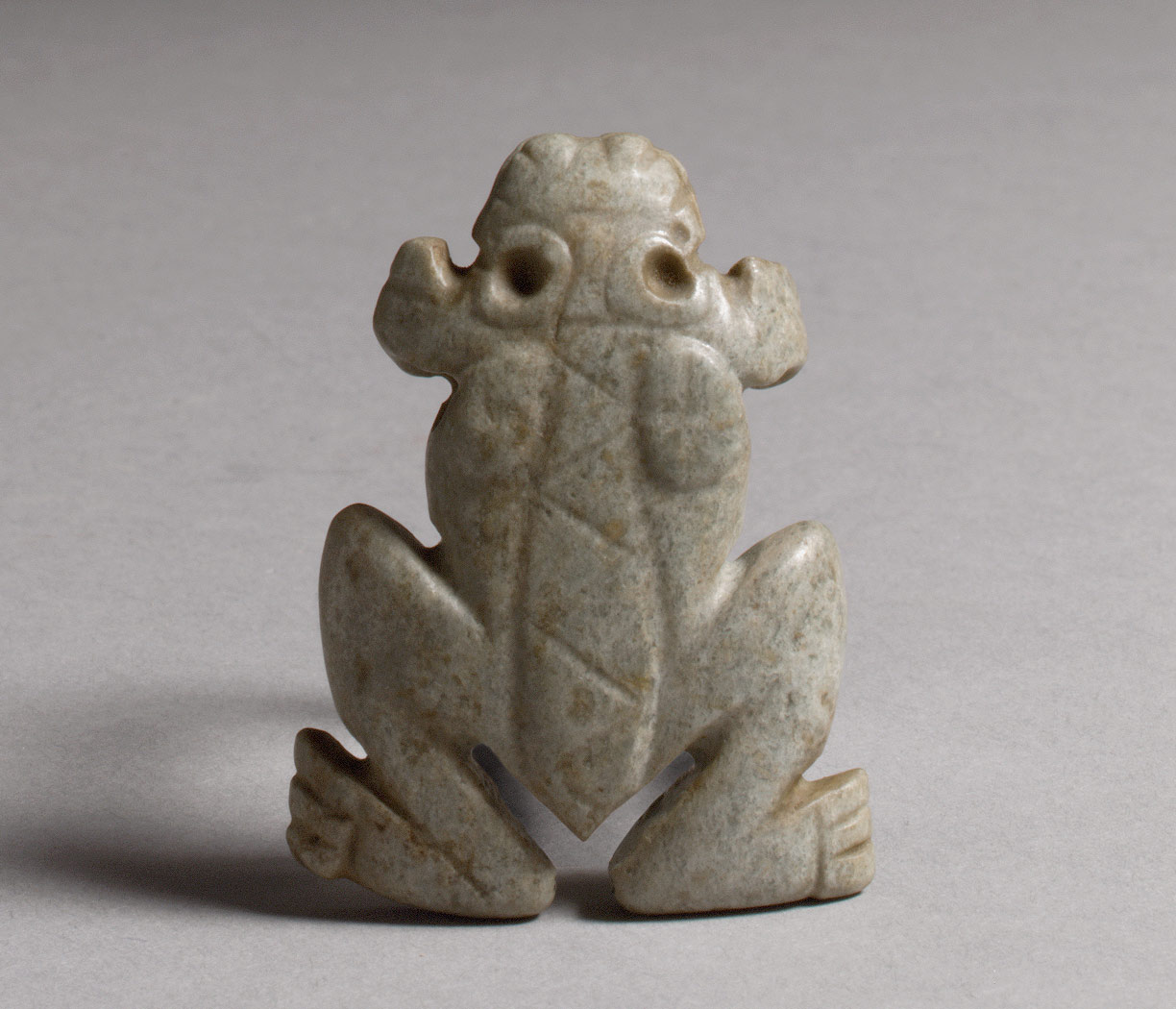
image from metmuseum.org
 **Nelson Rockefeller bequeathed this Costa Rican frog pendant from the 4th-8th Century  to the Metropolitan Museum. . there's another interesting topic in itself. More frogs' to follow.


Not only does the Jade Museum hold the largest jade collection in the world, you'll also be treated to lots of other Pre-Columbian gems, natural history and a good dose of geography. There is a Shamanic collection of pieces that is truly memorable and lots to keep both children and adults interested. 
The 7,000+ piece strong collection has never been exhibited in its entirety before now- the breadth of it and the quality is really something to behold- I couldn't cover a third of it and I was in an all-adult crowd! The newly opened (some bumps because it is literally brand new) 5 story multi-million dollar building is a beauty and the location perfect for seeing some interesting parts of San Jose.

FOOD:
**An authentic Italian restaurant that is within striking distance of the museum is a terrific stop if you want to break up the 'casado' fare. The owner and staff are wonderful. You'll find it on the corner just past the parking that sits behind the museum--- Sapore Trattoria 2222-8906

TIPS:
Try to visit on a Tuesday so you can take advantage of the National Theater noon concert  (see below) if you have guests with limited time to see the area.

Closes at 3:30
The new location makes for a nice San Jose outing-
1. The National Museum is almost next door (can be underwhelming but a good overview of Costa Rican history).
2. National Park: There is a beautiful park a couple block's away that is a green oasis and fun people watching.


image from delapuravida.com


I never get tired of visiting San Jose's crown jewel- the National Theater. It is a beautiful building to be sure, but what is really fascinating is absorbing just what was going on during the 'Coffee Rush' or the era of black gold. Built at the very end of the 1800's, you will be able to grasp how San Jose was able to follow behind New York and Paris in being amongst the first to electrify the city. (San Jose opened a power plant in 1884) Kids will be tickled spotting all the 'real gold' and imagining all the goods being shipped over from Europe to outfit the building.

*Be sure to take in the noon concert at the National Theater on Tuesday's. It is almost free and a great variety of entertainment is presented- you won't go wrong. Stay for a fascinating tour of the theater after with Jeff- he is extremely knowledgable and speaks excellent English.


*Kids and guests alike will delight in the pigeon-filled square that is adjacent to the theater. You can easily walk on the pedestrian-only avenue that will take you to the new Jade Museum.


FOOD:
The cafe located at the entrance of the theater is a great stop for all. Decadent ice cream concoctions, coffee drinks, and a host of bakery make for a fun visit.

Tips:
Plan to arrive around 11am to buy your tickets for the noon concert (or by them online) and then slip over to the cafe.The waitstaff knows how to hustle to make sure you will arrive to your seat in time for the start of the show.

****Thursdays at 5pm the salon upstairs (think a miniature version of a Versailles affair) hosts free Chamber music that lasts around an hour.

Image from travelcostarica.com


Repeat. Don't miss the tour with Jeff. Tickets can also be purchased at the box office.

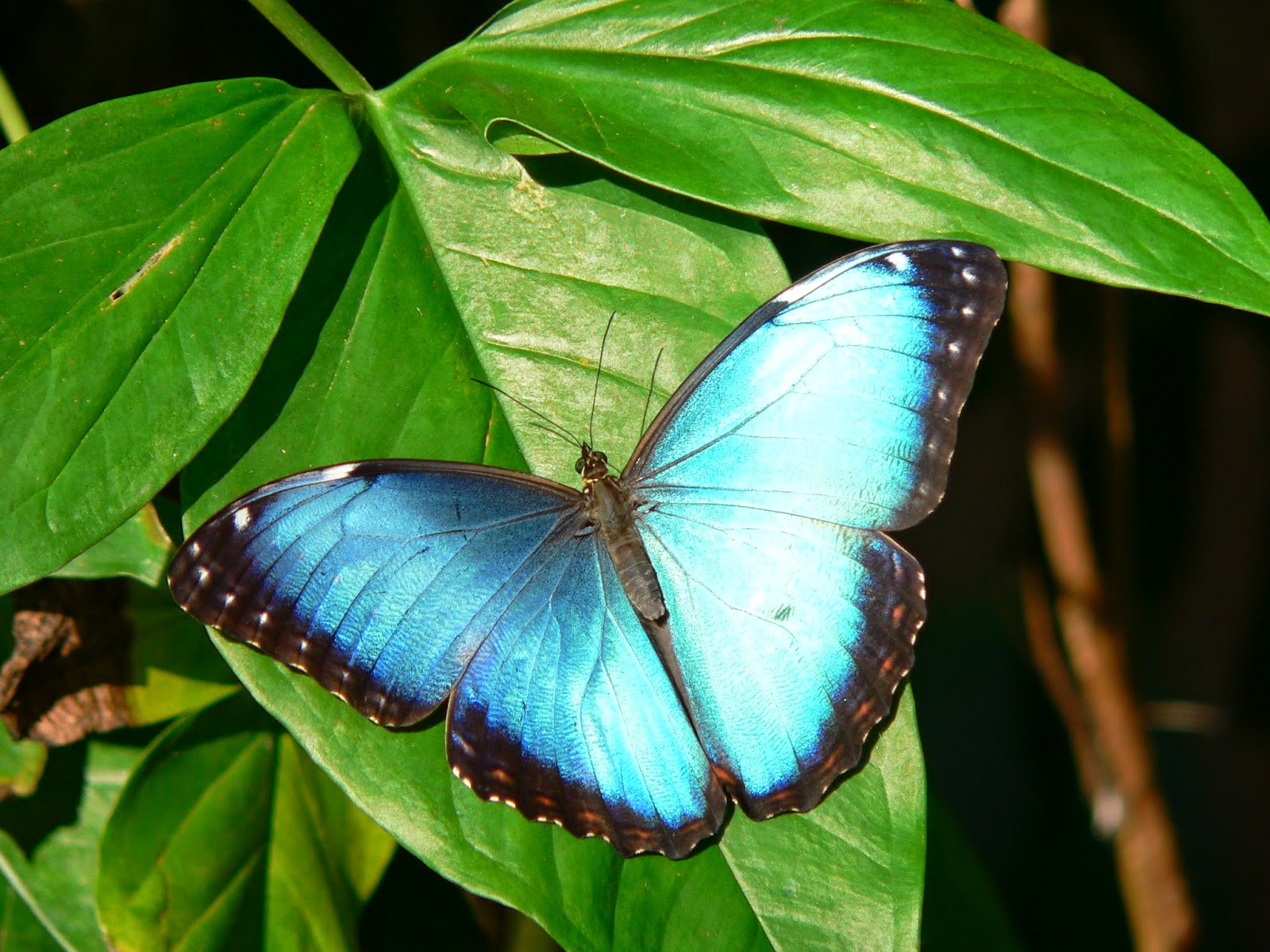
You'll have the chance to see lots of butterflies around Costa Rica, this garden is the place where you'll learn enough to feel like an encyclopedia and make all future butterfly encounters mean something.  You'll also be able to challenge the family to have a good ethical ponder about butterfly 'farming.' If the kids ever had a 'butterfly release' day there's a possibility they may have come from here.


Started by a former Peace Corps volunteer and now one of the world's largest butterfly 'suppliers,' one of the parts that most fascinated our kids and our guests was seeing how they package/ship. It's a real curiosity and a great opportunity to see just how something is done that you hadn't imagined. 
You reach it by taking the 'beach highway' and it's also a great way to see how much the weather and surroundings can change based on where you are in the Central Valley. La Garita area is hot most of the year and is nice snapshot of a rural area (floor of the valley vs. mountains of Heredia) that feels pretty far from the bustle of San Jose even though it's less than a half hour away.


Gold Museum

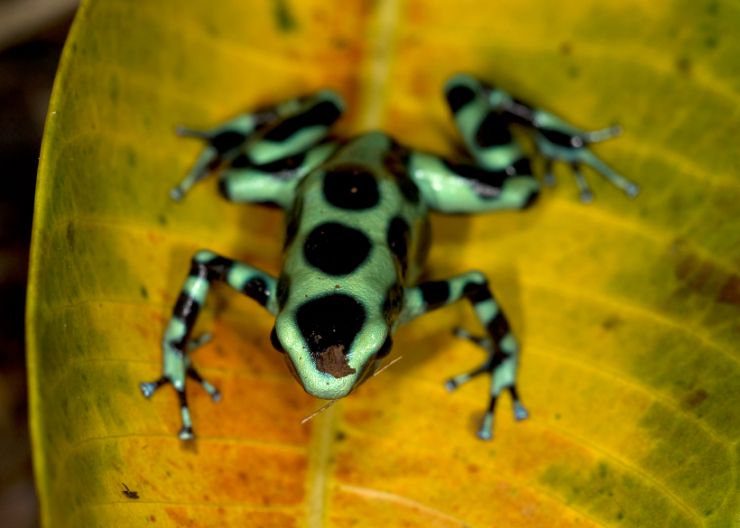
The Jade Museum is administered by the national insurance company, the Pre-Columbian Gold Museum is administered by the central bank- there's another topic for the kiddos! The 1600 artifacts in this collection date from 500 AD to 1500 AD It's a bit like walking through a vault which is unique in itself (there's a coin museum on-site as a bonus!). I still remember the gold frogs from when I visited 20 years ago; what is really a mind-blow is seeing the miniature red dart frog depicted in gold so long ago alive and well hopping around places like Arenal.


Image from smugmug.com

Or in green at Monteverde

Image from govisitcostarica.com

or Red-eyed green. . . (ok I've only seen these behind glass in Costa Rica and out in the wild in Nicaragua!) 

Image from kazjaz.com (a beautiful sabbatical year blog)


Now, top these colors off with the fact that these dart frogs are poisonous and indigenous people coated their weapons with the frogs' toxins and you've got some kiddos- talking material! 

Tip:
Bring jackets. Vault-like setting means that it can get chilly.
Closes at 4:30


InbioParque

Located close by in Santo Domingo, InbioParque is billed as an eco-tourist park. The expansive grounds are supposed to represent the biodiversity found in Costa Rica. Bear in mind, it is man-made and a bit dated but our littlest one never tires of spotting the (real) sloth in the trees, seeing the pretend crocodiles, pointing at the huge tarantulas that remind her of the real ones we've seen since we lived here. The very best of InbioParque for our family has been the petting zoo area.
This is a kid-outing.


On one hand, living in Costa Rica you're surrounded by nature and spectacular nature at that. Going to InbioParque reminds me just how much contact with animals and freedom to interact means to well, to just about everyone.

There's a lot of laughs to be had at the goats who will eat your clothing and the baby animals never cease to illicit a sense of wonder.

Grandparents and guests with really little ones will especially enjoy the outing.


The volcano exhibit might need some polishing but there's great old footage of Costa Rica's volcanoes and the 'simulator' is always fun.


TIPS:

Guides are available which help you get the most from your price of admission. Take the kiddos' student ID's- there's a big price difference between locals and tourists. 

InbioParque does a lot of weekend festivals, many with an ethnic theme. Food is available with local vendors that fit the theme. Our kiddos especially love the ones that involve chocolate. . .


Set in the beautiful hills near Santa Barbara, The Ark Herb Farm is a trip alright. So is the owner if he is around when you go. The Ark has one of the biggest collections of medicinal herbs in Costa Rica. It's a fantastic way to be able to have a better sense of the things you'll see in the markets and what beneficial properties they hold in store for you.

Photo from AM Costa Rica


There's one tree that 'bleeds' when cut with a knife, Gigi had a terrible cut on her knee which I swear the 'blood' from this tree healed her right up. The red fluid from the tree supposedly is an antiseptic and creates a 'skin'. 

The Ark is behind the label of Escazu Spices and provides the cruise ships and restaurants with herbs, lettuces and other goodies. You'll see the distribution center packaging up goods and have a chance to buy as many plants as you wish. It could be a fun project for the kiddos to pick what they are interested in and see how they grow up on the mountain. 

It's a fun outing for any guests who are passionate about plants or medicinal topics. There's a really neat treehouse that you can even stay in if you can ever get away or if you have a couple coming to visit that wants an unusual adventure. 


TIPS:
Study Google maps heavily before starting out!
Use Waze. . . are you getting it? It's not easy to find but not impossible either and the drive is beautiful.

Try not to go on a super hot day or try to go in the morning. Wear long pants and bring water. The bamboo stands are really something! Let the guide know the ages of your children.


FOOD:
In nearby Santa Barbara, a famous seafood restaurant awaits- Barco del Marisco.


Toucan Rescue Ranch


Located really close to us outside of Heredia (near Lomas), this is a trip for the kiddos to get close to 'tropical' animals including sloth babies, toucans, monkey, owls and so on. . . Leslie, the brainchild behind the Ranch has a neat story for the kids to see how the best laid plans can evolve. She never intended to become a major rehabilitation location for the country. She has students sponsoring animal enclosures and adopting sloths so it may be something the kids can tie in with their friends back home.

From Toucan Rescue Ranch blog

Our guests have really enjoyed touring with Carol who is a saint about setting up last minute tours for guests who are sorting out their schedules.

It's located in a beautiful setting (not that far from San Jose but a world away) and seeing the photos of what a malnourished toucan looks like and then seeing a pair soar overhead the next time you're at Manuel Antonio will change the experience for you. Same goes for the Scarlet Macaws. . .

Tips:

Be prepared for light showers- it's very close to the rain forest and you'll feel it.

Be prepared to want to donate. I have an Aunt who adopted a sloth. . .


That's it for now. These locations are low-hanging fruit for the San Jose area. There's so many hidden treasures like walking around at Monte de la Cruz (nice trails and playgrounds, our guests have been blown away by the 'highland' Costa Rica) or Bosque de la Hoja- both very close to you in Heredia and great 'in the field' ways to see pine forest transition to rain-ish forest. I enjoy that there are actual trails but often, I go out the roads that surround these places because they are sparsely used and in stunning locations.

I've always wanted to do the canopy tour located in Braulio Carillo (Rain Forest Adventures) known for the distinction as being the national park where the most tourists get lost! It's the park on the way to the Caribbean not too far from us with leaves as big as car windows--- a real rain forest if you will :)


Wishing you so well. It's a paradise out there and a hell depending on the moment. . . Hoping you have more of the former :)